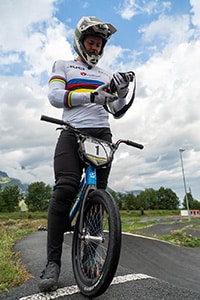
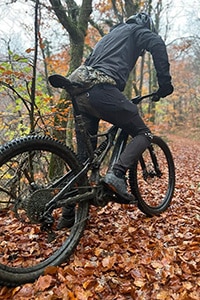
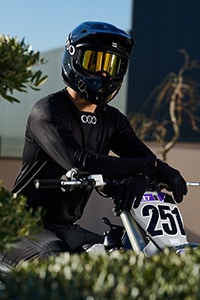
Let’s be honest right from the start: action sports aren’t just casual hobbies; they are a lifestyle and an absolute assault on the human body. Whether you are on a dirt track, a downhill MTB bike park, or a BMX track, the reality is brutal. As soon as you swing your leg over the saddle, you are navigating a battlefield made of hard-packed dirt, flying rocks, roots, and pure adrenaline.
A decade ago, every discipline enforced its own strict uniform: fragile, overpriced lycra for mountain bikers, thick jeans for BMX riders, and heavy armor for motocross.
Today, that boundary has completely vanished. Welcome to the era of the crossover rider.
The modern athlete is a hybrid. They spend their Saturday twisting the throttle in motocross, their Sunday bombing down an Enduro trail, and their Wednesday practicing BMX sprints. The adrenaline is the same. The hard crashes and hostile terrain are exactly the same. So, why pay for three completely different wardrobes and suffer the dreaded “bicycle tax”?
The secret is finally out: highly technical motocross gear is the absolute apex of off-road apparel. In this comprehensive guide, we are going to dissect the ideal crossover outfit piece by piece, from the science of the fabrics to the cultural revolution that propelled this gear from the dirt tracks straight into high-end urban streetwear.
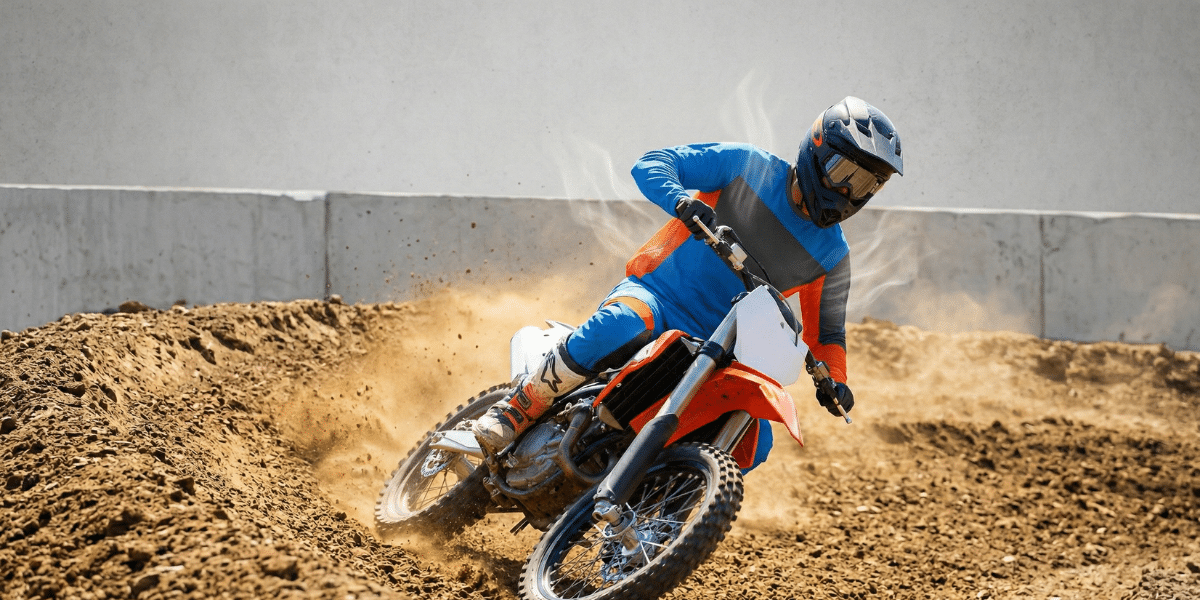
Before we dive into the fabrics and the fits, we need to talk about why high-quality crossover gear matters.
There is a common trap that beginners fall into. They will happily spend $10,000 on a new dirt bike or $5,000 on a carbon-fiber downhill mountain bike, and then they will try to save $50 by buying the cheapest, lowest-quality riding gear they can find on the internet.
This is a critical mistake. Your motocross outfit is your ultimate insurance policy. When things go wrong on the track—and if you push your limits, they will go wrong—the only thing standing between your fragile human skin and the unforgiving, rock-hard earth is the clothing you chose to wear that morning.
Investing in a premium enduro mtb outfit or motocross kit is not about looking like a factory pro (though that is a nice bonus). It is about ensuring you can get up, dust yourself off, and ride your bike back to the truck instead of taking a ride in an ambulance.
PRO RIDER ADVICE: DON’T SKIMP ON SAFETY
“I’ve seen too many riders ruin their season because they rode in cheap jeans or flimsy cycling shorts. Your skin is worth more than saving a few bucks. Treat your gear as the most important upgrade you can buy for your bike.”

When most people look at a racing outfit, their eyes are immediately drawn to the jersey. It features the brightest colors, the boldest designs, and it takes up the most visual real estate. However, many riders make the fatal mistake of treating their mtb or Motocross jersey top like a standard, long-sleeve cotton t-shirt.
While a jersey offers almost zero impact protection (that is what your hard-shell chest deflector is for), its role is arguably the most critical for your endurance. The primary job of your racing jersey is heat management and sweat evacuation.
Motocross, BMX racing, and Downhill MTB are some of the most cardiovascularly demanding sports on the planet. Your heart rate skyrockets the exact second the starting gate drops. Underneath your helmet, your heavy boots, and your chest armor, your core temperature rises at an alarming rate.
If you wear a standard cotton shirt on the track, the cotton absorbs your sweat like a kitchen sponge. It becomes heavy, it clings to your skin, and it completely stops the natural evaporation process. Within three laps, your body begins to overheat. When a rider overheats, a highly dangerous phenomenon known as “brain fog” sets in. Your reaction times drastically slow down, your peripheral vision narrows, you start braking late into corners, and ultimately, you crash.

To fight off heat exhaustion, modern racing jerseys are highly engineered pieces of athletic wear. You need a garment that works with your body, not against it.
Never, under any circumstances, buy a racing jersey with heavy, screen-printed graphics. Screen printing lays a thick layer of liquid plastic on top of the fabric. This acts as an impenetrable wall that traps heat against your chest and eventually cracks and peels after a few muddy washes.
Premium gear uses a high-tech process called Sublimation. This method uses heat to turn ink into a gas, which then permanently dyes the actual fibers of the polyester. The result is a fabric that remains 100% breathable, featuring vibrant neon or pastel colors that will never fade.
PRO RIDER ADVICE: BEAT THE HEAT
“If your jersey is sticking to your back after one lap, you’ve already lost the race mentally. You need a top that forces air through the fabric. Switch to a laser-cut, sublimated mesh jersey and watch your lap times drop because you can actually breathe.”

If your jersey handles the sweat, your motocross pants do the heavy lifting. When you look at the price tag of a complete gear set, the pants are always the most expensive component. Why? Because they are by far the most complex, heavily engineered, and abused piece of clothing you will ever wear.
Standard denim jeans or cheap off-road cycling pants will shred to pieces the second you hit the dirt at 30 mph. To survive the track, premium crossover pants are constructed from 600-Denier (600D) Polyester.
“Denier” is a measurement of the thickness and density of the individual threads used in the fabric. 600D is the industry gold standard. It provides a thick, woven, armor-like shell that resists tearing and abrasion during a crash. When you go down hard, this fabric ensures you slide across the dirt rather than leaving your skin on it.
This is the single most important feature to check when buying bmx pants or MX gear. Right where the inside of your knee grips a motorcycle, there is an exhaust pipe that can easily melt synthetic fabric in a matter of seconds.
To combat this, professional-grade pants feature large panels of genuine, heat-resistant cowhide leather sewn into the inner knees. But for the MTB and BMX rider, this leather serves a completely different, yet equally vital, dual purpose.
Not only does it act as a heat shield, but it also provides an incredible amount of friction. When you are launching off a 60-foot jump on a downhill bike, you must squeeze the bike with your legs to keep it from washing out from under you in the wind. That leather patch locks you onto the bike frame like superglue.
If you ride BMX or Enduro, you know the absolute terror of the flat pedal. Lined with sharp metal pins to keep your shoes locked in, they are basically bear traps. If your foot slips off during a sprint the dreaded “slip pedal” those pins will violently rake up your shin.
If you are wearing thin cycling shorts, your day is over and you are heading to the hospital for stitches. A dedicated crossover racing pant provides the heavy-duty woven shield necessary to block those pins and save your shins.

In the 1990s, racing pants were incredibly baggy to allow for movement. Today, aerodynamics and precision are key. Modern pants utilize a tapered “Athletic Fit.” This ensures that excess fabric doesn’t flap in the wind like a parachute, nor does it get caught on your footpegs or chewed up in your bicycle’s front sprocket.
But how do you maintain a tight fit without restricting a cyclist’s ability to pedal?
PRO RIDER ADVICE: THE GRIP ADVANTAGE
“Most mountain bikers don’t realize how much energy they waste trying to hold onto the bike with their arms. Get pants with genuine leather inner knees. Squeeze the frame with your legs in the air, save your upper body strength, and ride twice as long.”

Your hands are your lifeline. They are your only connection to the throttle, the clutch, and the front brake. If your grip fails, your ride is over. It is really that simple.
When beginners walk into a gear shop to buy motocross gloves or mtb gloves, they almost always make the same fundamental mistake: they buy the thickest, most heavily padded gloves they can find, assuming that more padding equals more protection. In reality, on a dirt track or a downhill trail, thick padding is your absolute worst enemy.
Have you ever been ten minutes into a fast ride, and suddenly your forearms feel like they are filled with wet cement? Your fingers lock up, you can barely pull the brake lever, and you feel like you are going to fly over the bars on the next braking bump. That feeling is called “Arm Pump” (exertional compartment syndrome), and it ruins race days.
Arm pump is primarily caused by over-gripping the handlebars. When you wear a thick, gel-padded cycling glove, it creates a squishy, disconnected barrier between your hand and the rigid metal handlebar. Because you cannot truly “feel” the bar, your brain subconsciously tells your hand to squeeze much harder than necessary. This restricts blood flow, builds up lactic acid, and causes arm pump. Furthermore, all that thick fabric bunches up in the palm of your hand, creating intense friction points that tear open massive, painful blisters.
The absolute best gloves on the market across all three sports are minimalist racing gloves. They are designed to act as an imperceptible second skin.
PRO RIDER ADVICE: FEEL THE MACHINE
“Thick gel pads on gloves are a gimmick that will ruin your braking response. You need to feel every vibration of the trail to know where your traction limits are. Switch to an unpadded Clarino palm and your control will instantly improve.”

Buying the best downhill mtb outfit or motocross kit in the world means absolutely nothing if it doesn’t fit properly. Gear that is too loose will snag on your bike; gear that is too tight will restrict your blood flow and limit your mobility.
Your jersey should have a tailored, athletic fit. It should contour to your body so it doesn’t flap in the wind, but it shouldn’t feel restrictive.
Motocross pants sit slightly higher on the hips than your everyday streetwear jeans.
Gloves are the one piece of gear that must fit flawlessly.
Finding proper youth motocross gear is vital for safety. Never buy gear that is “three sizes too big so they can grow into it.” Excess fabric can catch on chains and footpegs, causing severe accidents. Buy gear that fits them right now. The heavy-duty fabrics will protect them as they learn the harsh realities of bike control.

When you invest your hard-earned money into a premium, high-performance outfit, you want it to look sharp and perform flawlessly season after season. Taking care of highly technical polyester, Clarino synthetic leather, and massive stretch panels requires a slightly different routine than throwing your everyday cotton t-shirts in the wash.
Follow these golden rules to extend the lifespan of your apparel:

For decades, racing gear was strictly confined to the dirt tracks, the deep woods, and the deserts. You put it on at the truck, you rode, you got dirty, and you took it off before you drove home.
However, over the last five years, a massive cultural shift has occurred. The worlds of high fashion, urban culture, and extreme sports have violently collided. Triggered by the explosion of the BMX freestyle scene, the urban Enduro riders, and the massive “BikeLife” (Wheelie Boy) movement in major cities across the globe, streetwear motocross has officially become high-end fashion.
Riders and streetwear enthusiasts are taking clean, unbranded, or minimalist MX jerseys and integrating them seamlessly into their daily wardrobes. Because these jerseys are built from premium moisture-wicking polyester and feature laser-cut ventilation, they are incredibly functional for surviving sweltering summer days in the concrete jungle.
To master this look, the key is the art of contrast. Pair a vibrant, pastel, or neon racing jersey (like our highly sought-after Glory series) with dark, fitted denim jeans or technical cargo pants. Finish the look with a pair of fresh, high-top sneakers.
The oversized, athletic drape of the racing jersey provides an effortlessly cool, deeply authentic silhouette that cannot be replicated by standard, fast-fashion t-shirts. Why limit your favorite, most comfortable gear to the weekends at the track when you can command attention in the city?
PRO RIDER ADVICE: OWN THE STREETS
“You don’t need a dirt track to wear moto gear anymore. A crisp, pastel racing jersey paired with dark denim is the ultimate summer streetwear hack. It breathes better than any cotton shirt you own and turns heads everywhere.”
A: Honestly, I do not recommend it. While they look similar, motocross helmets are significantly heavier because they are certified (DOT/ECE) to withstand high-speed impacts with motor vehicles and extreme motocross jumps. Downhill MTB helmets are lighter, heavily ventilated, and certified (ASTM F1952) specifically for bicycle crashes. The extra weight of an MX helmet on a bicycle can cause severe neck fatigue. Wear the correct helmet for the specific sport, but absolutely mix the apparel!
A: MTB shorts offer absolutely zero protection for your shins and calves. If you slide out in a rock garden or slip a flat pedal, your legs will be shredded. Crossover pants provide 600D protection down to your ankle while utilizing 4-way stretch so they never restrict your pedaling.
A: Naturally, dark colors absorb more heat from the sun than light colors. But here is the catch: premium crossover gear is engineered to fight this. High-end gear is designed with massive laser-cut ventilation zones and breathable mesh to ensure that body heat escapes instantly, regardless of the colorway. If the gear breathes properly, you will stay cool even in stealth black.
A: Base layers are absolutely crucial. Avoid cotton underwear or cotton t-shirts at all costs, as they will trap sweat against your skin, causing severe chafing and overheating. Always wear moisture-wicking athletic compression shorts under your pants. For upper body armor, many riders prefer a slim, CE-certified impact shirt that fits snugly and invisibly under the racing jersey
The days of segregating your gear bag based on the type of handlebars you are holding are officially over. The modern rider is a crossover athlete, and your gear needs to be just as versatile, rugged, and dynamic as you are.
Gravity is the exact same for everyone. The dirt, the rocks, the roots, and the adrenaline do not care whether you are twisting a throttle, mashing flat pedals, or bombing down a technical rock garden.
By choosing to wear high-quality apparel engineered for the extreme rigors of motocross, you are making the smartest investment possible for your safety, your comfort, and your wallet. You get the unmatched durability of 600D polyester, the heat-shielding and grip of genuine leather, the unrestricted mobility of 4-Way stretch, and the supreme ventilation of laser-cut mesh.